Articles tagged xaa
Add Cross App Access to Your OIDC Resource Application

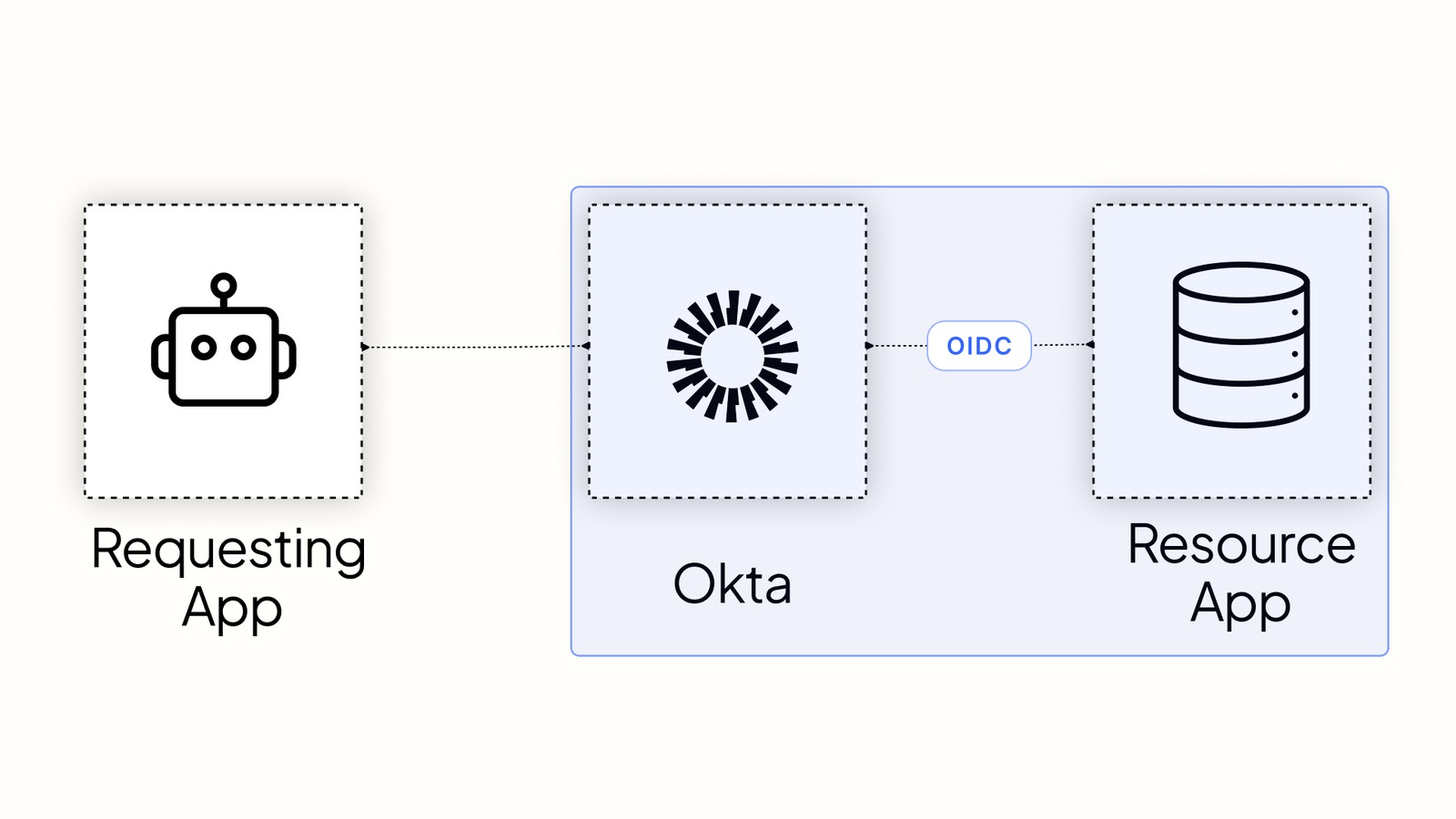
If you currently federate enterprise customers using OpenID Connect (OIDC) and want to allow applications to access your API on behalf of those users, this Cross App Access (XAA) guide is for you. The Identity Assertion Authorization Grant specification, the basis of XAA, was designed with OIDC in mind. Your authorization server already trusts the customer’s IdP for single sign-on (SSO), and XAA reuses that same trust for API access. This guide details what you...
Add Cross App Access to Your OIDC Requesting Application
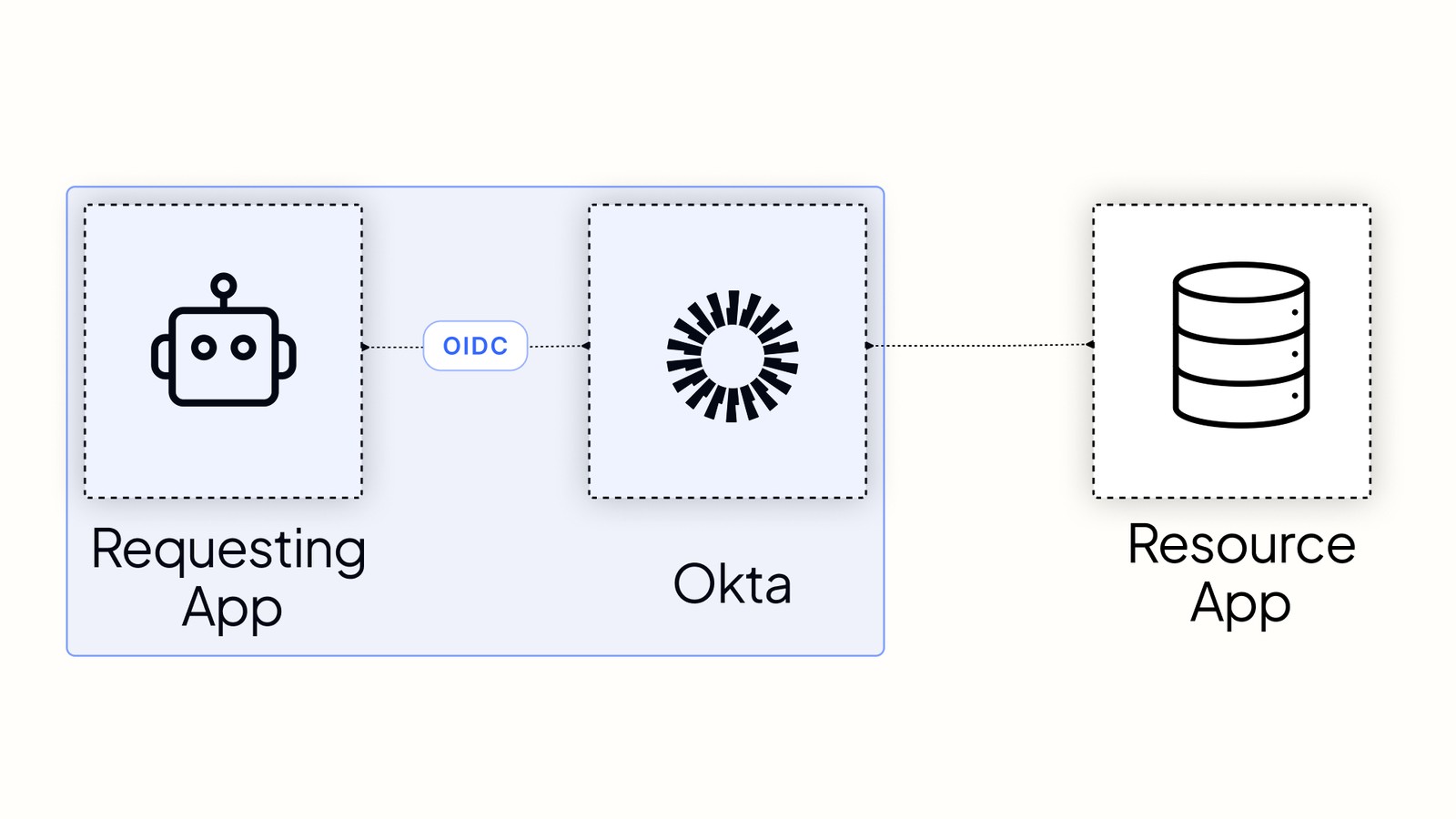
If you currently federate enterprise customers using OpenID Connect (OIDC) and want to connect with third-party applications, this Cross App Access (XAA) guide is for you. The Identity Assertion Authorization Grant specification, the basis of XAA, was designed with OIDC in mind. Your app already holds an ID token after sign-in, but it’s the refresh token from that same sign-in that you exchange to reach a third-party app. This guide details what you need to...
Enable Your SAML Requesting App for Cross App Access




If you currently federate enterprise customers using Security Assertion Markup Language (SAML) and want to connect with third-party applications without migrating to OpenID Connect (OIDC), this Cross App Access (XAA) guide is for you. The Identity Assertion Authorization Grant specification, the basis of XAA, was originally designed with OIDC in mind. To use it in SAML applications, you must accommodate specific security and uniqueness requirements. This guide details what you need to support and how...
Build a Secure C# MCP App with Cross App Access (XAA)
A few years ago, getting a user signed in to an application or multiple applications with Single Sign-On (SSO) was enough; OpenID Connect (OIDC) handled the login, JWTs carried the claims, and Proof Key for Code Exchange (PKCE) made it secure. Today, with evolving AI, agents act on behalf of users and seek multiple accesses across different resources to execute a task. And that is when you’ll hit the gap. The user has an identity,...
Build, Test, and Publish a Cross App Access App in the Okta Integration Network


Cross App Access (XAA) lets your application request data from another vendor’s API on behalf of a signed-in enterprise user, without static API keys and without a separate consent prompt for every connection. If enterprises buy your software, supporting XAA turns your integration into something their IT team can govern centrally. This guide walks through building XAA support into your app or Model Context Protocol (MCP) server, testing the token exchange with Okta’s developer tools,...
Enabling Cross App Access for SAML-Based Resource Apps

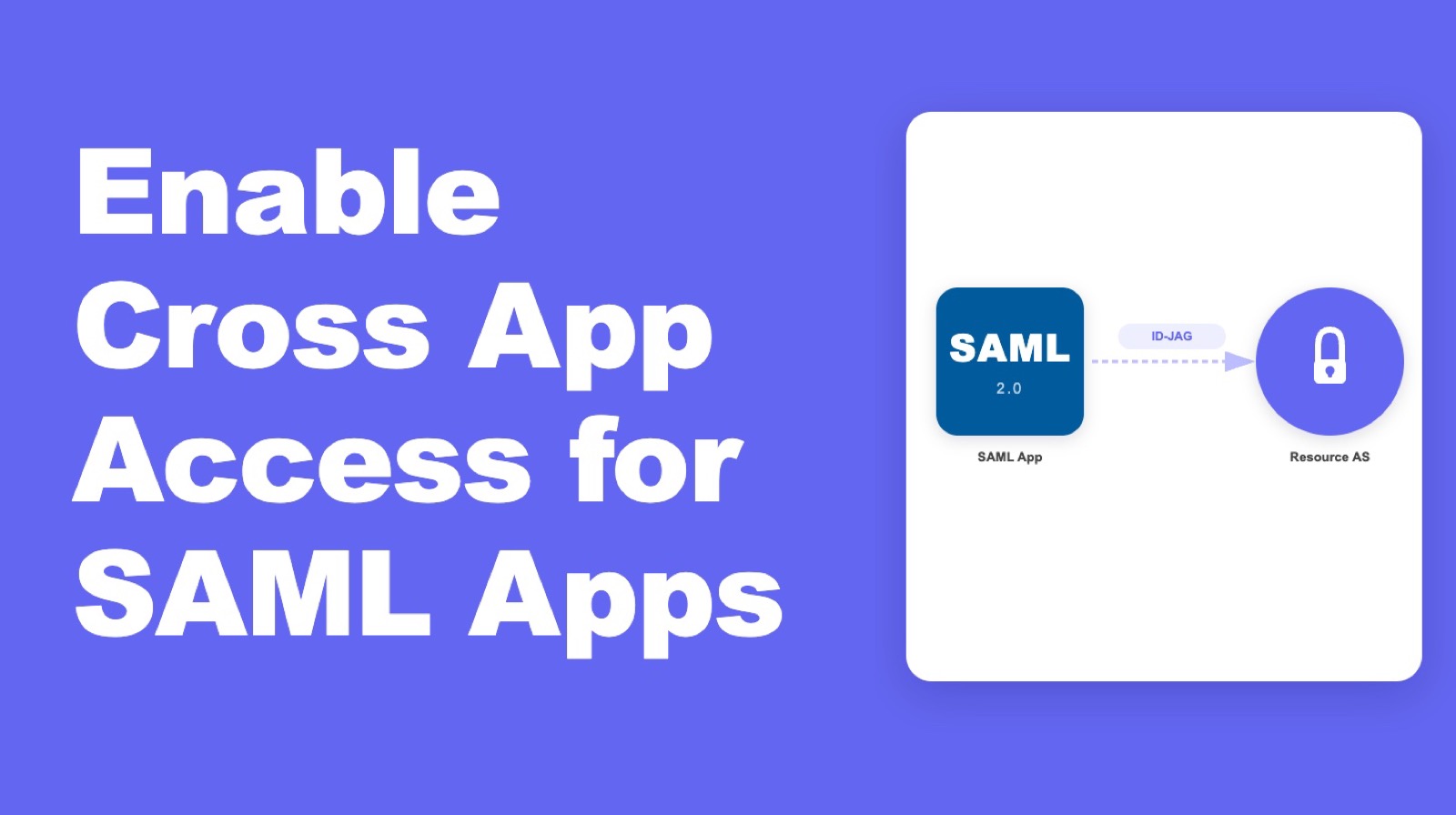
If you currently federate enterprise customers using Security Assertion Markup Language (SAML) and want to allow applications to access your API without migrating to OpenID Connect (OIDC), this Cross App Access (XAA) guide is for you. The Identity Assertion Authorization Grant specification, the basis of XAA, was originally designed with OIDC in mind. To use it in SAML applications, you must accommodate specific security and uniqueness requirements. This guide details what you need to support...
Okta Developer Connect San Francisco 2026 Recap

“Building an agent is only half the battle. Governing it is where we get stuck.” That question came up in nearly every conversation we had with engineering managers leading up to Okta Developer Connect San Francisco. The second edition of our flagship developer event series brought more than 100 developers, architects, founders, platform engineers, and security leaders to Okta HQ on April 30 for an afternoon of technical sessions, hands-on labs, and community conversations on...
Make Secure App-to-App Connections Using Cross App Access
Imagine you built a note-taking app. It’s so successful that LargeCorp, an aptly named large enterprise corporation, signed on as a customer. To make it a power tool for your enterprise customers, you need to allow your app to integrate with other productivity tools, such as turning a note into a task in a to-do app. While common integration patterns work well for individual users, these patterns create security and compliance hurdles for large organizations....
Introducing xaa.dev: A Playground for Cross App Access
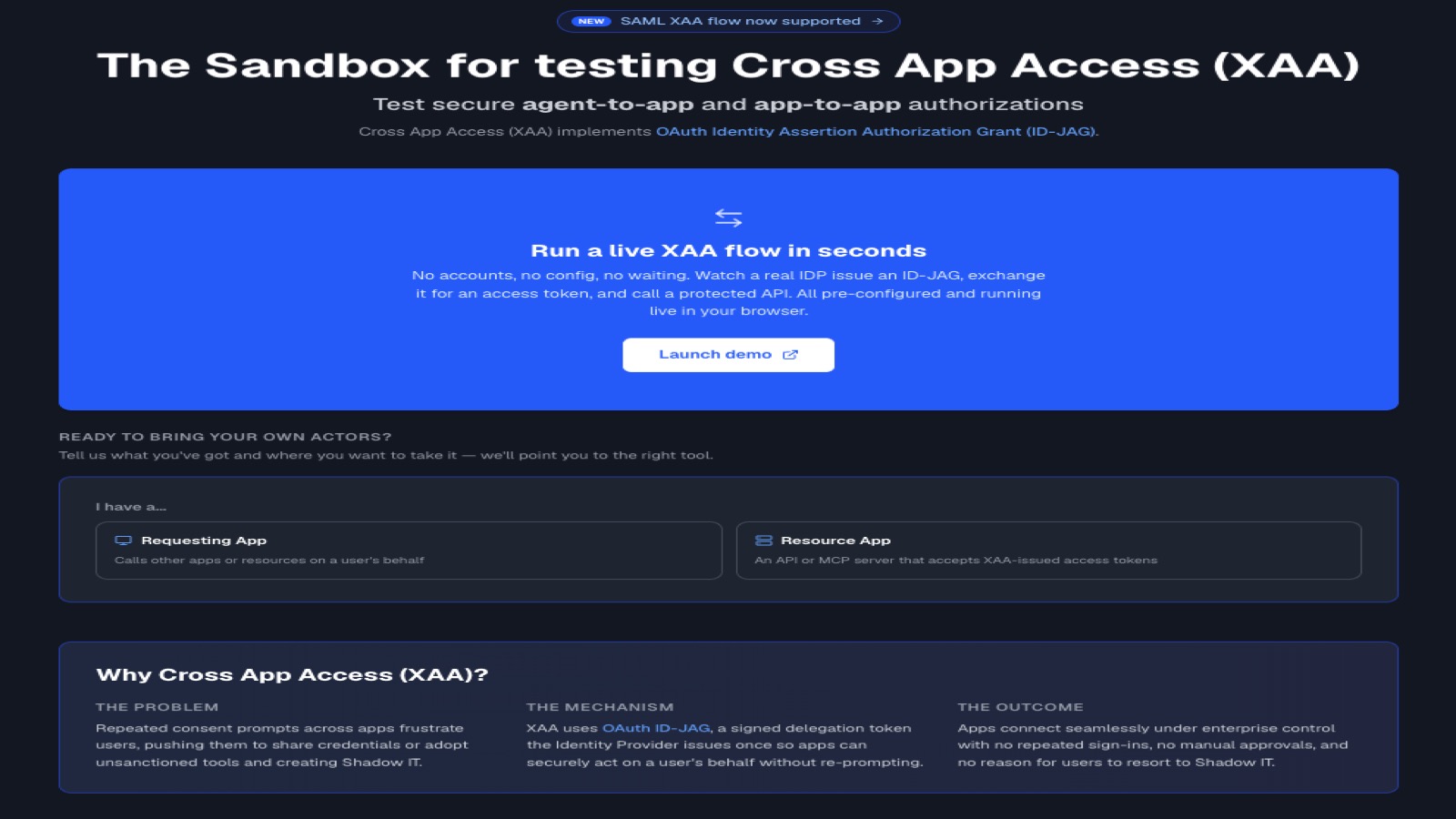
AI agents are quickly becoming part of everyday enterprise development. They summarize emails, coordinate calendars, query internal systems, and automate workflows across tools. But once an AI agent needs to access an enterprise application on behalf of a user, things get complicated. How do you securely let an AI-powered app act for a user without exposing credentials, spamming consent prompts, or losing administrative control? This is the problem Cross App Access (XAA) is designed to...
Build Secure Agent-to-App Connections with Cross App Access (XAA) Using OIDC
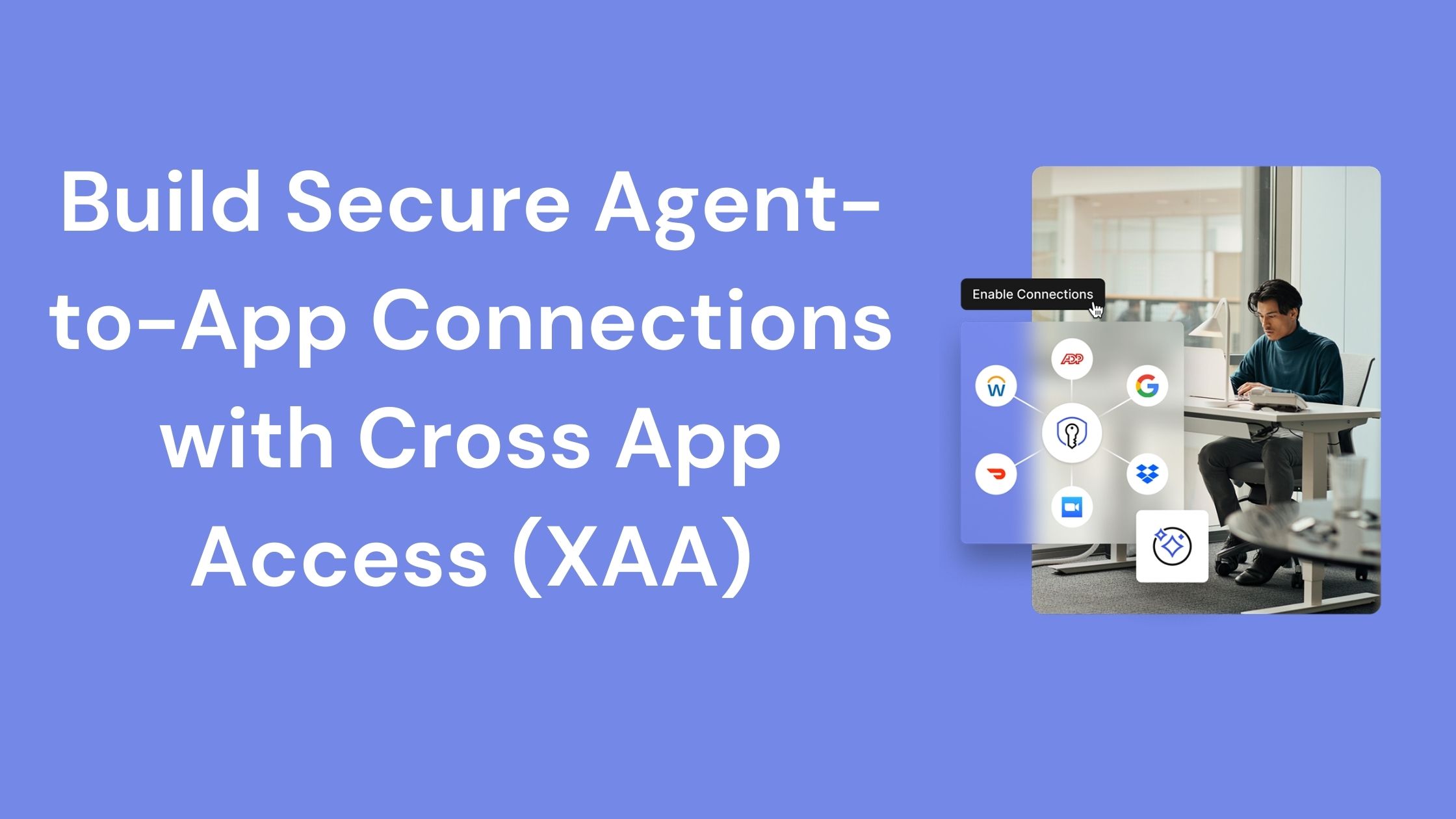
⚠️ This guide is out of date The Okta Admin Console steps in this guide no longer work: the XAA Resource App and XAA Requesting App App Catalog integrations, along with the Manage Connections tab, have been replaced by AI agent registration under Directory > AI Agents. Building the app that owns the API, validates the ID-JAG, and issues its own access token? Read Add Cross App Access to Your OIDC Resource Application. Building the...
Integrate Your Enterprise AI Tools with Cross App Access (XAA)
SaaS apps not only have to meet the rigorous demands of managing users at an enterprise level but must also be secure and resilient by design. In “An Open Letter to Third-party Suppliers”, Patrick Opet, Chief Information Security Officer of JPMorgan Chase, writes: “Modern integration patterns, however, dismantle these essential boundaries, relying heavily on modern identity protocols (e.g., OAuth) to create direct, often unchecked interactions between third-party services and firms’ sensitive internal resources.” Modern identity...